
The Origins of Tea and the Birth of a Tradition
The story of Chinese tea stretches back more than five thousand years, woven into the history, culture, and daily life of one of the world's oldest civilizations. While the exact origins of tea drinking remain uncertain, references to tea appear throughout ancient Chinese literature, reflecting a tradition that evolved over millennia.
According to legend, tea was discovered in 2737 BCE when leaves from a wild tea tree drifted into a pot of boiling water belonging to the legendary Emperor Shennong (神农), revered as the Divine Farmer and father of Chinese agriculture and medicine. Whether myth or history, the story symbolizes tea's enduring connection to nature, health, and human curiosity.
Early written references suggest that tea was originally valued for its medicinal properties before becoming a daily beverage. Ancient Chinese communities recognized tea's ability to aid digestion, promote alertness, and complement meals, traditions that continue to influence tea culture today.
As tea spread throughout China, it became far more than a simple drink. It accompanied scholars in their studies, monks in their meditation, merchants along trade routes, and families in their daily lives. Over centuries, tea evolved into a symbol of hospitality, refinement, and cultural expression.

The transformation of tea into a true art form reached a defining moment during the Tang Dynasty (618-907 CE) with the work of Lu Yu (陆羽), honored throughout history as the Sage of Tea. His renowned masterpiece, The Classic of Tea (茶经, Chájīng), became the world's first comprehensive treatise dedicated entirely to tea. More than a practical guide, it explored tea cultivation, preparation, equipment, aesthetics, and philosophy, establishing many of the principles that continue to influence tea appreciation today.
Although Lu Yu's original manuscript has not survived, preserved editions dating from the Ming Dynasty have carried his knowledge forward through the centuries. Composed in the elegant literary style of the Tang Dynasty and consisting of approximately 7,000 Chinese characters, The Classic of Tea remains one of the most influential works ever written on tea and marks the beginning of tea scholarship as we know it.
The history of Chinese tea is ultimately the story of people, landscapes, traditions, and ideas connected across generations. From ancient forests and mountain villages to imperial courts and modern tea tables, each cup offers a connection to a living heritage that continues to inspire tea lovers around the world.
A Journey Through Time 时光之旅

c. 2737 BCE → The Legend of Shennong 神农
According to Chinese tradition, tea was discovered when leaves from a wild tea tree drifted into boiling water prepared for the legendary Emperor Shennong, marking the traditional beginning of tea's journey through Chinese civilization.
Key Developments
→ Divine Farmer
→ Herbal Medicine
→ Tea Discovery
→ Curiosity
→ Nature's Lessons
→ Early Tea
According to Chinese tradition, tea was discovered when leaves from a wild tea tree drifted into boiling water prepared for the legendary Emperor Shennong, marking the traditional beginning of tea's journey through Chinese civilization.
Key Developments
→ Divine Farmer
→ Herbal Medicine
→ Tea Discovery
→ Curiosity
→ Nature's Lessons
→ Early Tea Use
→ Tea Origins
→ Cultural Legacy
Continue Your Journey
c. 350 BCE → Early Written References to Tea
Tea begins appearing in ancient Chinese texts, providing some of the earliest surviving evidence of tea's role in society. These early records mark the transition of tea from oral tradition into the documented history of Chinese civilization.
Key Developments
→ Early Records
→ Er Ya References
→ Tea Terminology
→ Tea as food and medicine
→
Tea begins appearing in ancient Chinese texts, providing some of the earliest surviving evidence of tea's role in society. These early records mark the transition of tea from oral tradition into the documented history of Chinese civilization.
Key Developments
→ Early Records
→ Er Ya References
→ Tea Terminology
→ Tea as food and medicine
→ Herbal Knowledge
→ Regional cultivation
→ Regional Cultivation
Continue Your Journey
→ Tea Enters the Historical Record
→ Tea During the Han Dynasty 汉朝
206 BCE - 220 CE → Tea During the Han Dynasty 汉朝
Tea spreads throughout southern China and becomes increasingly important in medicine, agriculture, trade, and daily life. The Han Dynasty helped establish the foundations for tea's future growth across Chinese civilization.
Key Developments
→ Early Cultivation
→ Medicinal Uses
→ Daily Consumption
→ Southern China
→ Regional Trade
→ Silk Road In
Tea spreads throughout southern China and becomes increasingly important in medicine, agriculture, trade, and daily life. The Han Dynasty helped establish the foundations for tea's future growth across Chinese civilization.
Key Developments
→ Early Cultivation
→ Medicinal Uses
→ Daily Consumption
→ Southern China
→ Regional Trade
→ Silk Road Influence
→ Agricultural Growth
→ Cultural Expansion
Continue Your Journey
→ Tea During the Han Dynasty 汉朝
4th–7th Century CE → Tea and Buddhism 茶与佛教
Buddhist monks embraced tea as an aid to meditation, study, and monastic life. Monasteries helped preserve and spread tea cultivation throughout China.
Key Developments
→ Monastic Traditions
→ Tea & Meditation
→ Temple Gardens
→ Tea Cultivation
→ Buddhist Influence
→ Cultural Exchange
→ Knowledge Sharing
→ Early Tea Rituals
→ Cultural diffusion
→ Fo
Buddhist monks embraced tea as an aid to meditation, study, and monastic life. Monasteries helped preserve and spread tea cultivation throughout China.
Key Developments
→ Monastic Traditions
→ Tea & Meditation
→ Temple Gardens
→ Tea Cultivation
→ Buddhist Influence
→ Cultural Exchange
→ Knowledge Sharing
→ Early Tea Rituals
→ Cultural diffusion
→ Foundations of tea ceremony
Continue Your Journey
618-907 CE → Tea Flourishes, Tang Dynasty 唐朝
Tea becomes a national beverage and an important part of Chinese culture, scholarship, and religious life.
Key Developments
→ Tea Houses
→ Tea Culture
→ Buddhist Influence
→ Tea Cultivation
→ Trade Expansion
→ Regional Teas
→ Literary Influence
→ Expansion of tea cultivation
→ Rise of tea culture
→ National Beverage
Continue Your Journey
c. 760 CE → Lu Yu Writes The Classic of Tea 茶经
Lu Yu publishes the world's first comprehensive study of tea, establishing tea as a subject of scholarship and cultural appreciation.
Key Developments
→ The Sage of Tea
→ Tea Scholarship
→ The Ten Chapters
→ Tea Geography
→ Tea Cultivation
→ Tea Preparation
→ Cultural Appreciation
→ Impact on tea culture
→ Lasting Legacy
Continue Your Journey
→ Writ
Lu Yu publishes the world's first comprehensive study of tea, establishing tea as a subject of scholarship and cultural appreciation.
Key Developments
→ The Sage of Tea
→ Tea Scholarship
→ The Ten Chapters
→ Tea Geography
→ Tea Cultivation
→ Tea Preparation
→ Cultural Appreciation
→ Impact on tea culture
→ Lasting Legacy
Continue Your Journey
960-1279 CE → Song Dynasty Tea Renaissance 宋朝
Tea appreciation reaches new heights during the Song Dynasty through whisked tea, scholarly gatherings, artistic refinement, and the pursuit of aesthetic excellence. Tea becomes both a cultural tradition and an expression of scholarship, creativity, and personal cultivation.
Key Developments
→ Whisked Tea
→ Tea Competitions
→ Tea Aesthetics
→
Tea appreciation reaches new heights during the Song Dynasty through whisked tea, scholarly gatherings, artistic refinement, and the pursuit of aesthetic excellence. Tea becomes both a cultural tradition and an expression of scholarship, creativity, and personal cultivation.
Key Developments
→ Whisked Tea
→ Tea Competitions
→ Tea Aesthetics
→ Scholar Culture
→ Tea Arts
→ Tea Appreciation
→ Literary Influence
→ Artistic Refinement
Continue Your Journey
1271-1368 CE → Tea Trade During Yuan Dynasty 元朝
Trade routes expanded across Asia during the Yuan Dynasty, allowing tea, knowledge, technologies, and cultural traditions to travel farther than ever before. Tea became part of a growing network of commerce and exchange that connected distant regions and peoples.
Key Developments
→ Mongol Influence
→ Trade Expansion
→ Tea Commerce
→ Caravan Ro
Trade routes expanded across Asia during the Yuan Dynasty, allowing tea, knowledge, technologies, and cultural traditions to travel farther than ever before. Tea became part of a growing network of commerce and exchange that connected distant regions and peoples.
Key Developments
→ Mongol Influence
→ Trade Expansion
→ Tea Commerce
→ Caravan Routes
→ Cultural Exchange
→ Regional Markets
→ Cross-Regional Travel
→ Tea Distribution
Continue Your Journey
1368-1644 CE → Ming Dynasty Rise of Loose-Leaf Tea 明朝
Compressed tea cakes gradually give way to loose-leaf tea, transforming brewing practices and laying the foundation for modern tea preparation.
Key Developments
→ Loose-Leaf Tea
→ Brewing Innovation
→ Yixing Teapots
→ Regional Teas
→ Tea Craftsmanship
→ Leaf Appreciation
→ Tea Quality
→ Modern Foundations
Continue Your Journey
1644-1912 CE → Tea During the Qing Dynasty 清朝
Many of China's most famous tea regions and styles flourished during the Qing Dynasty. Expanding trade networks, regional specialization, and international exports helped establish Chinese tea as a global cultural and commercial influence.
Key Developments
→ Wuyi Teas
→ Pu-erh Trade
→ Tea Exports
→ Regional Teas
→ Oolong Development
→ Tea Comme
Many of China's most famous tea regions and styles flourished during the Qing Dynasty. Expanding trade networks, regional specialization, and international exports helped establish Chinese tea as a global cultural and commercial influence.
Key Developments
→ Wuyi Teas
→ Pu-erh Trade
→ Tea Exports
→ Regional Teas
→ Oolong Development
→ Tea Commerce
→ Tea Diversity
→ Global Influence
Continue Your Journey
1700s-1900s → Tea Horse Road 茶马古道
Ancient trade routes connected Yunnan tea producers with Tibet and neighboring regions, carrying tea, goods, and cultural traditions across Asia's mountain landscapes.
Key Developments
→ Caravan Trade
→ Pu-erh Trade
→ Horse Exchange
→ Mountain Routes
→ Regional Cultures
→ Trade Communities
→ Cultural Exchange
→ Tea Horse Road
Continue Your Journey
→
Ancient trade routes connected Yunnan tea producers with Tibet and neighboring regions, carrying tea, goods, and cultural traditions across Asia's mountain landscapes.
Key Developments
→ Caravan Trade
→ Pu-erh Trade
→ Horse Exchange
→ Mountain Routes
→ Regional Cultures
→ Trade Communities
→ Cultural Exchange
→ Tea Horse Road
Continue Your Journey
1912–Present → Tea Through Modern China 近现代中国茶文化
Political change, modernization, and global trade reshape the tea industry while traditional practices continue to be preserved, revitalized, and shared with a growing international audience.
Key Developments
→ Industry Modernization
→ Tea Education
→ Cultural Preservation
→ Regional Revival
→ Modern Gong Fu Cha
→ Global Recognition
→ Tea Researc
Political change, modernization, and global trade reshape the tea industry while traditional practices continue to be preserved, revitalized, and shared with a growing international audience.
Key Developments
→ Industry Modernization
→ Tea Education
→ Cultural Preservation
→ Regional Revival
→ Modern Gong Fu Cha
→ Global Recognition
→ Tea Research
→ Global Tea Community
Continue Your Journey
The Legendary Discovery of Tea 神农尝茶

c. 2737 BCE
The story of tea begins not with a written record, but with a legend. For thousands of years, Chinese tradition has traced the origins of tea to Shennong (神农), the Divine Farmer, whose curiosity and observation of nature became the foundation of one of the world's most enduring cultural traditions.

Historical Overview
The earliest traditions surrounding tea are inseparable from the legend of Shennong (神农), the Divine Farmer, one of the most revered cultural figures in early Chinese civilization. According to Chinese tradition, Shennong taught the people agriculture, herbal medicine, and the cultivation of plants that improved daily life. His reputation as a teacher, healer, and observer of nature made him a symbol of humanity's relationship with the natural world.
The most famous tea legend recounts that in approximately 2737 BCE, Shennong was boiling water beneath a wild tea tree when several leaves drifted into the vessel. Curious about the aroma and appearance of the resulting infusion, he tasted the liquid and discovered its refreshing and restorative qualities. Whether viewed as history, legend, or a combination of both, this story became the foundation of tea's origin narrative within Chinese culture.
Although there is no archaeological evidence proving that this event occurred exactly as described, the legend reflects an important historical truth. Long before tea became a subject of scholarship, trade, ceremony, or cultural refinement, early communities were learning from nature through careful observation and experimentation. Tea likely emerged gradually as people explored the medicinal and practical uses of local plants.
Over time, the story of Shennong became more than an account of discovery. It evolved into a cultural symbol representing curiosity, learning, and the enduring relationship between people and the natural world. For thousands of years, the legend has served as the traditional starting point for the history of Chinese tea.
Historical Context
Although tea's legendary discovery is traditionally dated to 2737 BCE, archaeological and historical evidence suggests that the use of tea developed gradually over many centuries. The legend of Shennong serves as a symbolic starting point for understanding tea's place within Chinese civilization.
Tea in Early Chinese Civilization
Long before tea became a subject of trade, scholarship, or ceremony, early communities relied upon a close understanding of the natural world. Plants provided food, medicine, shelter, and countless materials essential to daily life. Within this environment, the discovery and use of tea would have been part of a broader tradition of observing, testing, and learning from nature.
The association between Shennong and tea reflects these early foundations of Chinese civilization, where agriculture, herbal medicine, and practical knowledge were closely interconnected. Tea's enduring relationship with health, learning, and daily life can trace part of its cultural heritage to these ancient traditions.
Myth and History
While historians cannot verify the legendary account of Shennong's discovery of tea, the story remains one of the most enduring traditions in Chinese cultural history. Like many origin stories, it serves not only as a historical narrative but also as a reflection of cultural values.
The legend emphasizes careful observation, respect for nature, and the pursuit of knowledge. These themes continue to resonate throughout Chinese tea culture and help explain why the story has been preserved for more than five thousand years. Whether regarded as mythology, folklore, or symbolic history, the tale of Shennong remains central to understanding how tea is viewed within Chinese civilization.
While archaeological evidence cannot confirm the details of the legend, the story reflects values that remained central to Chinese tea culture for centuries: respect for nature, careful observation, and the belief that knowledge should be preserved and shared. For this reason, the legend of Shennong continues to be remembered as the traditional beginning of tea's historical journey.
Why It Matters
The story of Shennong reminds us that tea's journey begins in nature. Before tea became a commodity, a cultural tradition, a subject of scholarship, or an art form, it was a simple leaf discovered through curiosity and observation.
The legend establishes many of the themes that continue throughout the history of tea: learning from nature, preserving knowledge, improving daily life, and passing traditions from one generation to the next. It provides the symbolic foundation upon which centuries of cultivation, trade, scholarship, and cultural development would later be built.
Every chapter in the history of tea, from ancient manuscripts and Buddhist monasteries to The Classic of Tea and modern tea academies, can trace its origins back to the enduring story of discovery represented by Shennong.
From legend and observation, tea's story would gradually move from memory and tradition into the written record of Chinese civilization.
→ Early Written References to Tea
Tea Enters the Historical Record 茶入史册
c. 350 BCE
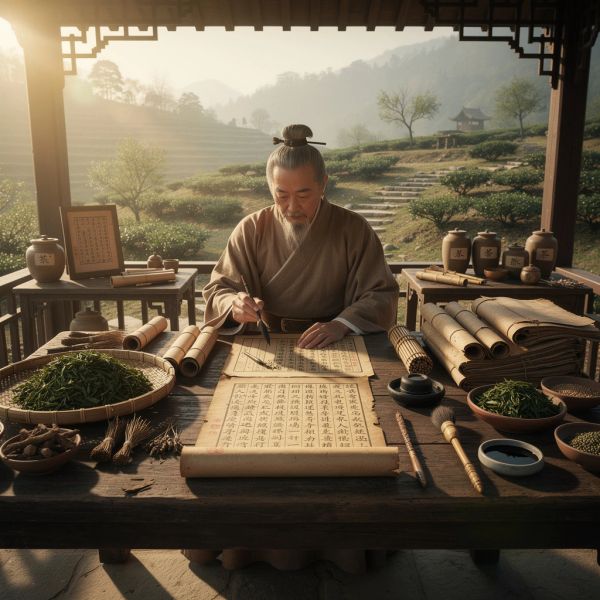
The earliest surviving references to tea mark an important turning point in its history. For the first time, tea appears not only in legend and tradition, but within the written record, providing valuable insight into how early Chinese communities understood and used tea.
Historical Overview
While the legend of Shennong provides the traditional origin story of tea, the earliest surviving written references offer the first historical evidence of tea's place within Chinese society. By the 4th century BCE, tea had begun appearing in ancient Chinese texts, marking the transition from oral tradition to recorded history.
Among the earliest known references is the Er Ya (尔雅), one of China's oldest surviving dictionaries and scholarly works. Although references were often brief and terminology varied by region, these early writings suggest that tea was already known and valued long before it became a widespread cultural tradition.
During this period, tea was primarily associated with southern China, where wild tea trees and early cultivation practices were most common. Tea was valued not only as a beverage but also as a medicinal plant and food ingredient. These early references provide important clues about how tea was understood before the development of organized tea culture.
The appearance of tea in written records represents an important milestone in its historical journey. For the first time, tea moved beyond legend and entered the documented history of Chinese civilization.
Tea in Early Chinese Literature
The earliest references to tea reveal a society that was actively documenting the plants, foods, and medicines that shaped daily life. Ancient scholars compiled observations about tea alongside other important agricultural and medicinal resources, reflecting the practical role tea played within early communities.
Unlike later periods, where tea became associated with ceremony, philosophy, and artistic appreciation, early written references often focused on tea's functional uses. It was recognized for its refreshing qualities, medicinal value, and role in supporting health and well-being.
These records provide a rare glimpse into a time when tea was still emerging as an important part of Chinese life. They help bridge the gap between the legendary traditions of Shennong and the sophisticated tea culture that would flourish in later centuries.
Historical Context
Many of the earliest references to tea are fragmentary and often use terminology that differs from modern Chinese usage. As a result, historians continue to study ancient texts to better understand when and how tea became integrated into daily life.
Although these records do not provide a complete picture of tea culture, they offer valuable evidence that tea was already recognized and utilized centuries before the Tang Dynasty. These writings represent the earliest surviving documentary foundation for the history of tea.
Why It Matters
The earliest written references to tea mark the point where tea's story enters the historical record. They provide evidence that tea was already valued for its practical and medicinal qualities long before it became a subject of trade, scholarship, and cultural appreciation.
These records remind us that tea's development was gradual. What began as a useful plant known to local communities would eventually evolve into one of the most influential cultural traditions in Chinese history. Every later chapter in tea's story, from Buddhist monasteries and imperial courts to tea houses and modern tea academies, builds upon the foundations preserved in these early writings.
By preserving tea within the written record, these early texts ensured that knowledge about tea could be shared, studied, and passed forward to future generations.
As tea entered the historical record, its cultivation and practical uses continued to expand throughout the growing communities of ancient China.
Tea During the Han Dynasty 汉朝
206 BCE – 220 CE
The Han Dynasty marked an important stage in tea's development from a regional plant into a familiar part of daily life. As agriculture expanded, trade routes connected distant communities, and knowledge spread throughout China, tea became increasingly recognized for its practical, medicinal, and cultural value.
The foundations established during this period helped prepare the way for the flourishing tea traditions that would emerge in later centuries.

Historical Overview
During the Han Dynasty, tea continued its gradual transition from a regional plant and medicinal resource into a more widely recognized part of daily life. Although tea had not yet achieved the cultural prominence it would later enjoy during the Tang and Song dynasties, evidence suggests that its cultivation, consumption, and practical uses were becoming increasingly established throughout southern China.
The Han Dynasty was a period of agricultural expansion, economic development, and growing regional connections. As communities exchanged goods, knowledge, and medicinal practices, tea spread beyond its earliest centers of use. While still primarily associated with southern regions where tea plants grew naturally, tea became more familiar to a wider population through trade and travel.
Tea remained closely connected to health and well-being. Early records indicate that it was valued for its refreshing qualities and medicinal properties, continuing traditions that likely originated centuries earlier. Tea was often regarded as both a practical beverage and a useful herbal resource.
Although tea had not yet become a refined cultural practice, the Han Dynasty established many of the foundations that would later support its growth. The expansion of cultivation, trade networks, and agricultural knowledge helped prepare the way for tea's transformation into one of China's most important cultural traditions.
Tea in Daily Life
During the Han Dynasty, tea was increasingly integrated into everyday activities. Farmers, merchants, travelers, and local communities utilized tea for its practical benefits, particularly in regions where tea plants were naturally abundant.
Unlike later periods, tea was not yet associated with elaborate ceremonies or scholarly gatherings. Instead, it was appreciated for its usefulness, medicinal value, and ability to complement daily life. These practical applications helped establish tea's enduring place within Chinese society long before it became a symbol of culture and refinement.
Historical Context
The Han Dynasty connected distant regions through expanding trade routes and growing economic activity. While tea was not yet a major commodity, the movement of people, goods, and ideas contributed to the gradual spread of tea knowledge throughout China.
Archaeological discoveries and historical records suggest that tea was becoming increasingly recognized during this period, although its role remained largely practical rather than ceremonial. The foundations established during the Han Dynasty would support the dramatic growth of tea culture in the centuries that followed.
Why It Matters
The Han Dynasty represents an important stage in tea's historical journey. It marks the period when tea began moving beyond local traditions and becoming integrated into broader patterns of agriculture, trade, medicine, and daily life.
While later dynasties would transform tea into a cultural, artistic, and philosophical tradition, the Han Dynasty helped establish the practical foundations upon which that future development would be built. The spread of cultivation, growing familiarity with tea, and expanding regional connections all contributed to tea's emergence as an enduring part of Chinese civilization.
As tea became increasingly woven into daily life, Buddhist communities would help preserve and elevate its role within Chinese society.
Tea and Buddhism 茶与佛教
4th-7th Century CE
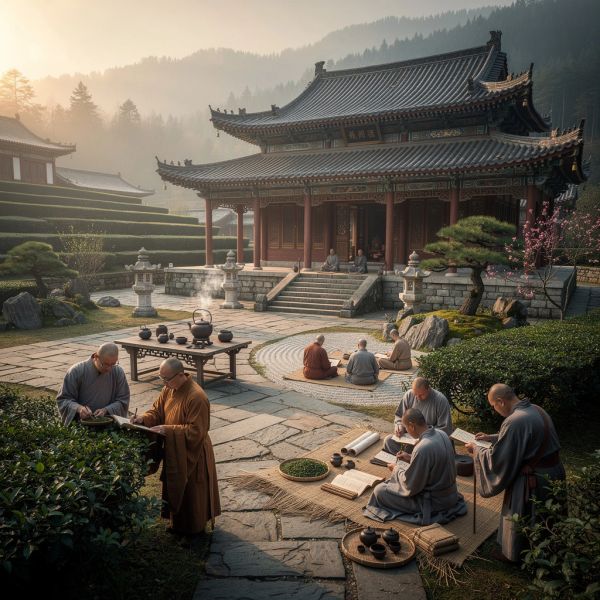
Buddhist monks embraced tea as an aid to meditation, study, and monastic life. As Buddhism spread throughout China, monasteries became important centers for the cultivation, preparation, and preservation of tea. The quiet discipline of monastic life and the practical benefits of tea created a natural partnership that would profoundly influence the future of Chinese tea culture.
Historical Overview
Between the 4th and 7th centuries CE, Buddhism became one of the most influential spiritual and cultural forces in China. During this period, tea gained increasing importance within monastic communities, where monks valued it for its ability to promote alertness during long periods of meditation, study, and religious practice.
Many monasteries were located in mountainous regions ideally suited for cultivating tea. Monks not only consumed tea but also participated in its cultivation, processing, and preparation. As a result, temples became important centers for preserving and spreading tea knowledge throughout China.
The relationship between tea and Buddhism helped transform tea from a practical beverage into a symbol of mindfulness, discipline, and harmony. These early monastic traditions would later influence tea ceremonies, tea philosophy, and the broader cultural appreciation of tea that emerged in subsequent dynasties.
By the end of this period, tea had become firmly established within many Buddhist communities, laying the foundation for the flourishing tea culture of the Tang Dynasty.
Tea in Monastic Life
Within Buddhist monasteries, tea served practical and spiritual purposes. Monks often consumed tea before meditation, scripture study, and daily work, appreciating its ability to refresh the mind and support concentration.
Tea preparation became integrated into the rhythm of monastic life. Temple gardens provided space for cultivation, while the sharing of tea encouraged community, hospitality, and reflection. Through these practices, tea became closely associated with the values of simplicity, mindfulness, and respect for nature.
Long before tea houses and scholarly gatherings became common, monasteries helped establish many of the traditions that would later shape Chinese tea culture.
Historical Context
Historical records suggest that Buddhist monasteries played a significant role in preserving and spreading tea culture during this period. As monks traveled between regions, they carried agricultural knowledge, religious teachings, and tea traditions with them.
Many of China's future tea-growing regions developed close connections with Buddhist institutions. The relationship between tea and monastic life helped ensure that tea knowledge survived and expanded during centuries of cultural and political change.
While tea was not yet the refined cultural practice it would become during the Tang and Song dynasties, its growing association with Buddhism helped elevate its importance within Chinese society.
Why It Matters
The relationship between tea and Buddhism represents one of the most important developments in the history of tea. Through monastic communities, tea became associated with mindfulness, learning, discipline, and spiritual reflection.
Many of the values still associated with tea today, including simplicity, attentiveness, harmony with nature, and the sharing of knowledge, were strengthened through centuries of Buddhist influence. These traditions helped prepare the way for the emergence of tea scholarship, tea aesthetics, and the flourishing tea culture of the Tang Dynasty.
The story of tea and Buddhism reminds us that tea's history is agricultural or economic. It is also a story of ideas, beliefs, and the search for understanding
As tea became increasingly associated with mindfulness, learning, and cultural refinement, the foundations were laid for the flourishing tea culture that would define the Tang Dynasty.
Tea Flourishes During Tang Dynasty 唐朝
618-907 CE
The Tang Dynasty marked a turning point in the history of tea. What had once been a regional beverage valued primarily for its practical and medicinal uses evolved into a cultural tradition embraced throughout Chinese society. Tea became an important part of daily life, scholarship, religion, commerce, and hospitality, laying the foundation for the flourishing tea culture that would influence generations to come.
Historical Overview
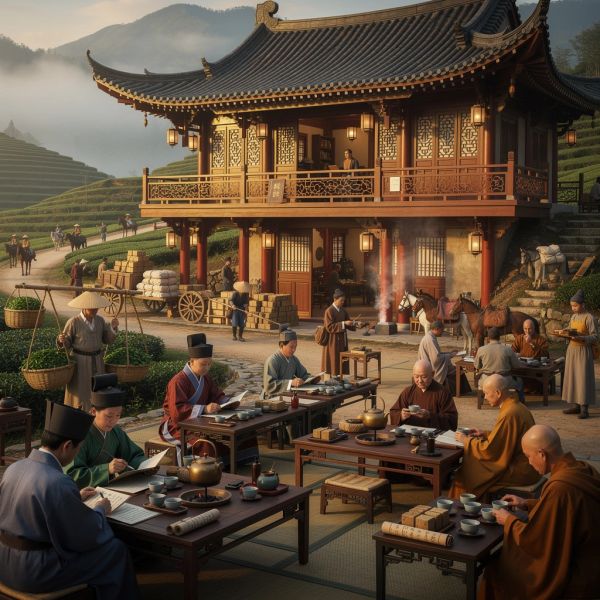
During the Tang Dynasty, tea achieved unprecedented popularity across China. Improvements in agriculture, transportation, and trade allowed tea cultivation to expand into new regions, while growing demand encouraged greater production and distribution. Tea was no longer confined to local communities or medicinal use. It became a beverage enjoyed by people from all levels of society.
Tea houses emerged in cities and along travel routes, providing places for conversation, relaxation, and the exchange of ideas. Scholars, merchants, officials, monks, and travelers all participated in a growing tea culture that connected people across geographic and social boundaries.
Buddhist monasteries continued to play an important role in preserving and cultivating tea traditions. At the same time, tea became increasingly associated with poetry, literature, art, and intellectual life. The beverage evolved beyond its practical origins and became a symbol of refinement, hospitality, and cultural appreciation.
By the end of the Tang Dynasty, tea had become firmly established as one of China's most important cultural traditions, setting the stage for the scholarly contributions of Lu Yu and the development of sophisticated tea practices in later dynasties,
Tea in Tang Society
Tea became woven into nearly every aspect of Tang Dynasty life. It was consumed in homes, monasteries, government offices, inns, markets, and tea houses. Tea provided refreshment for travelers, inspiration for poets, companionship for scholars, and support for monks engaged in study and meditation.
As tea's popularity grew, so did the appreciation for its preparation, quality, and regional character. Communities developed local traditions and preferences, contributing to the rich diversity that would later define Chinese tea culture.
The Tang Dynasty transformed tea from a useful beverage into a shared cultural experience that brought people together across all levels of society.
Historical Context
The Tang Dynasty is often regarded as one of the great golden ages of Chinese civilization. Economic prosperity, cultural achievement, and expanding trade networks created an environment in which tea could flourish.
The growth of tea cultivation and distribution allowed tea to reach communities throughout the empire. At the same time, poets, scholars, monks, and officials increasingly documented their experiences with tea, helping establish many of the traditions and values associated with tea culture today.
It was within this environment that tea evolved from a practical commodity into a subject of cultural appreciation, intellectual discussion, and artistic expression.
Why It Matters
The Tang Dynasty represents the moment when tea became more than a beverage. It became an important expression of Chinese culture, bringing together agriculture, commerce, religion, scholarship, and daily life.
Many of the traditions that continue to define tea culture today, including tea appreciation, hospitality, regional identity, and the sharing of tea among friends and communities, can trace their roots to this remarkable period.
The flourishing tea culture of the Tang Dynasty also created the conditions that made possible one of the most influential works in tea history: The Classic of Tea (茶经) by Lu Yu. Through its growth during this era, tea became a subject worthy of study, reflection, and cultural preservation.
The flourishing tea culture of the Tang Dynasty inspired scholars to preserve and organize tea knowledge, culminating in the work of Lu Yu.
Lu Yu Writes The Classic of Tea 茶经
c. 760 CE
During the Tang Dynasty, tea culture reached a level of maturity that inspired the creation of the world's first comprehensive work devoted entirely to tea. Around 760 CE, the scholar Lu Yu (陆羽), later honored as the Sage of Tea, completed The Classic of Tea (茶经), establishing tea as a subject worthy of study, reflection, and cultural appreciation.
More than a practical guide, the work transformed tea from a daily beverage into a subject of scholarship, preserving knowledge that would influence tea culture for centuries to come.

Historical Overview
As tea became increasingly important throughout Tang Dynasty society, knowledge about cultivation, preparation, utensils, and regional traditions remained scattered among farmers, monks, merchants, and local communities. Recognizing the need to preserve and organize this knowledge, Lu Yu undertook the task of documenting tea in a systematic and scholarly manner.
The result was The Classic of Tea (茶经), the world's first known treatise devoted entirely to tea. The work examined the tea plant, cultivation methods, processing techniques, preparation practices, tea utensils, geography, history, and cultural appreciation. By bringing these subjects together into a single text, Lu Yu created a foundation for the study of tea that remains influential to this day.
More than a technical manual, The Classic of Tea elevated tea into an expression of culture, learning, craftsmanship, and harmony with nature. It became one of the most influential works in the history of Chinese tea.
Lu Yu: The Sage of Tea
Born during the Tang Dynasty, Lu Yu devoted much of his life to studying tea and the traditions surrounding it. His observations drew upon the knowledge of farmers, monks, scholars, and artisans, allowing him to document tea from multiple perspectives.
Because of his contributions, later generations honored him with the title: The Sage of Tea (茶圣)
His work helped establish many of the principles that continue to influence tea appreciation, cultivation, preparation, and scholarship today.
Historical Context
The publication of The Classic of Tea occurred during a period when tea had become deeply integrated into Chinese society. Tea houses flourished, monasteries cultivated tea, merchants transported tea across expanding trade routes, and scholars increasingly viewed tea as a subject worthy of intellectual discussion.
Lu Yu's work captured this growing cultural significance and preserved it for future generations. Through careful observation and documentation, he transformed centuries of accumulated knowledge into a lasting record that could be studied and shared throughout China.
Why It Matters
Few individuals have influenced tea culture as profoundly as Lu Yu. Through The Classic of Tea, he preserved knowledge that might otherwise have been lost and established tea as a subject of cultural and scholarly importance.
Many of the ideas that continue to shape tea culture today, including the importance of origin, craftsmanship, preparation, appreciation, and harmony with nature, can trace part of their heritage to his work.
The publication of The Classic of Tea marks the moment when tea became more than a beverage or cultural practice. It became a subject of study, reflection, and preservation, ensuring that tea knowledge could be shared across generations.
By transforming tea into a subject of study and scholarship, Lu Yu helped prepare the way for the artistic refinement that would define the Song Dynasty.
Song Dynasty Tea Renaissance 宋朝
960-1279 CE
The Song Dynasty marked one of the most refined and influential periods in the history of Chinese tea culture. Building upon the foundations established during the Tang Dynasty, tea evolved beyond a shared cultural tradition into an expression of aesthetics, scholarship, artistry, and personal cultivation.
During this era, tea appreciation reached new heights, shaping many of the values and practices that continue to influence tea culture today.
Historical Overview
During the Song Dynasty, tea became deeply intertwined with the intellectual and artistic life of Chinese society. Scholars, poets, officials, monks, and artists embraced tea not only as a beverage but as a means of cultivating mindfulness, appreciation, and refinement.
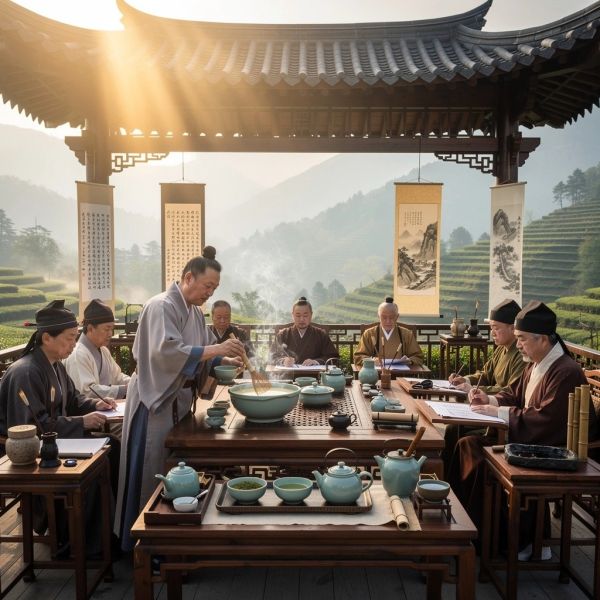
One of the defining characteristics of the period was the popularity of whisked tea, a preparation method in which finely ground tea was whisked into hot water to create a smooth and delicate foam. Tea preparation became both a practical skill and an artistic pursuit, inspiring gatherings, competitions, and social events devoted to the appreciation of tea.
Tea culture flourished within scholarly circles, where tea was often enjoyed alongside poetry, calligraphy, painting, and philosophical discussion. The preparation and appreciation of tea became expressions of taste, discipline, and personal character. Communities throughout China also developed regional traditions and preferences, contributing to the growing diversity of Chinese tea culture.
The Song Dynasty elevated tea from a cultural tradition into a refined art form, establishing standards of appreciation and aesthetics that would influence generations of tea enthusiasts.
Tea as an Art Form
The Song Dynasty is often regarded as the age in which tea became an artistic discipline. Tea preparation required attention to detail, quality ingredients, and skilled technique. The beauty of tea bowls, the elegance of preparation, and the atmosphere of the gathering became as important as the beverage itself.
Tea competitions known as doucha (斗茶) gained popularity among scholars and tea enthusiasts. Participants compared tea quality, whisking technique, and the appearance of the foam created during preparation. These gatherings encouraged innovation, appreciation, and the development of sophisticated tea aesthetics.
The pursuit of excellence in tea reflected broader Song Dynasty values that celebrated learning, craftsmanship, refinement, and harmony.
Historical Context
The Song Dynasty was a period of remarkable cultural achievement and intellectual growth. Advances in education, literature, philosophy, and the arts created an environment in which tea culture could flourish.
As tea became increasingly associated with scholarship and refinement, gatherings centered around tea emerged as important social and cultural events. Tea served as a bridge between learning, creativity, and, helping establish traditions that would influence later tea ceremonies and appreciation practices throughout East Asia.
The innovations of this era helped transform tea from a cultural custom into an art worthy of study, practice, and mastery.
Why It Matters
The Song Dynasty Tea Renaissance represents one of the most influential periods in the history of tea. Many of the principles that continue to define tea appreciation today, including attentiveness, craftsmanship, aesthetics, and respect for quality, were refined during this remarkable era.
The emphasis on beauty, technique, and personal cultivation elevated tea beyond simple consumption. Tea became a medium through which individuals could express creativity, discipline, and an appreciation for harmony.
The traditions developed during the Song Dynasty helped shape later tea ceremonies, tea arts, and tea philosophies, ensuring that tea would remain both a cultural tradition and an artistic pursuit for centuries to come.
As tea evolved into an art of aesthetics, craftsmanship, and personal cultivation, expanding trade networks carried these traditions to new regions and cultures.
Tea Trade During Yuan Dynasty 元朝
1271-1368 CE
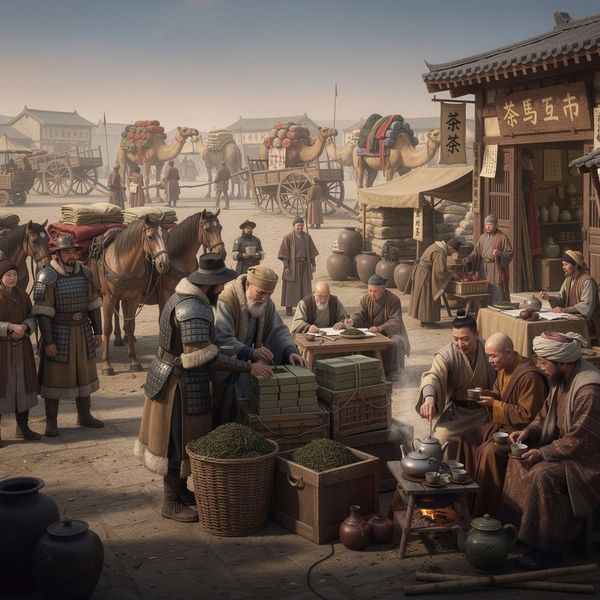
The Yuan Dynasty marked a period of expanding trade, cultural exchange, and regional connectivity across Asia. Under Mongol rule, vast networks of roads, trade routes, and administrative systems linked distant regions, allowing goods, ideas, technologies, and traditions to travel more freely than ever before. Tea benefited greatly from these connections, reaching new communities and strengthening its role within regional commerce and daily life.
Historical Overview
Established by Kublai Khan, the Yuan Dynasty governed one of the largest empires in world history. The Mongol Empire connected territories stretching across much of Asia, creating unprecedented opportunities for trade and communication. While tea was already an important part of Chinese society, the expanded trade networks of the Yuan period helped increase its movement between regions and neighboring cultures.
Tea traveled alongside silk, ceramics, medicinal goods, horses, and other commodities. Merchants, travelers, monks, diplomats, and caravan operators carried tea across mountains, grasslands, and trade corridors that linked China with Central Asia and beyond.
The increased movement of people encouraged the exchange of agricultural knowledge, preparation techniques, and cultural practices associated with tea. Regional tea traditions continued to evolve as communities adapted tea to local customs and preferences.
Although the Yuan Dynasty is often remembered for its political and military history, it also played an important role in extending the geographic reach and cultural influence of tea throughout Asia.
Tea Along the Trade Routes
Tea became an increasingly important commodity within regional commerce during the Yuan Dynasty. Merchants transported tea across long distances, supplying growing markets and connecting tea\-producing regions with distant communities.
Trade routes served not only as channels for goods but also as pathways for ideas and cultural exchange. Through these networks, knowledge about tea cultivation, preparation, storage, and consumption spread across diverse regions and populations.
Tea's ability to travel well, particularly in compressed forms, made it a practical trade commodity. As tea moved between cultures, it contributed to new traditions and strengthened economic ties between communities.
Historical Context
The Yuan Dynasty benefited from the relative stability created by Mongol administration across large portions of Asia. Historians often refer to this period as facilitating increased movement of merchants, travelers, and goods throughout interconnected trade networks.
Tea was not the only commodity to benefit from these developments. Agricultural products, technologies, artistic traditions, religious ideas, and cultural practices also traveled between regions. Tea culture expanded within this broader environment of exchange and interaction.
The growth of trade and transportation helped prepare the way for the continued development of regional tea traditions that would flourish during later dynasties.
The movement of tea across Asia strengthened connections between distant peoples and helped prepare the way for new innovations in tea cultivation and preparation.
The Ming Dynasty and the Rise of Loose-Leaf Tea 明朝
1368–1644 CE
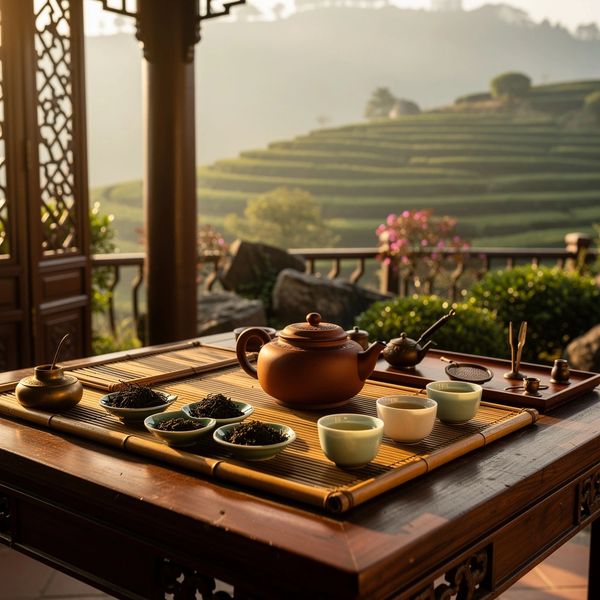
The Ming Dynasty marked one of the most transformative periods in the history of tea. During this era, the long-standing tradition of compressed tea cakes gradually gave way to loose-leaf tea, fundamentally changing how tea was prepared, appreciated, and enjoyed. These innovations established many of the brewing practices that continue to influence tea culture today.
Historical Overview
The founding of the Ming Dynasty brought significant changes to Chinese tea production and consumption. One of the most important developments occurred when compressed tea cakes, which had dominated earlier periods, gradually declined in popularity and were increasingly replaced by loose\-leaf tea.
This transition transformed nearly every aspect of tea culture. Preparation methods became simpler, allowing the natural character, aroma, and flavor of individual teas to be appreciated more directly. Rather than grinding tea into powder and whisking it into a froth, tea drinkers increasingly infused whole leaves in hot water.
The shift encouraged innovation in tea cultivation, processing, and brewing. Tea producers developed new techniques to highlight the unique qualities of different tea varieties and growing regions. As a result, regional tea identities became more distinct and celebrated.
By the end of the Ming Dynasty, loose-leaf tea had become the dominant form of tea consumption, laying the foundation for many modern Chinese tea traditions.
The Loose-Leaf Revolution
The transition from compressed tea cakes to loose\-leaf tea represented far more than a change in preparation. It altered the way people experienced tea itself.
Tea drinkers could now observe the appearance of the leaves, appreciate their aroma, and evaluate the character of individual tea varieties. Greater attention was given to origin, craftsmanship, and quality. Brewing became a more personal and direct interaction with the tea.
These developments encouraged a deeper appreciation of terroir, seasonal variation, and artisanal production. The principles established during this period continue to influence modern tea appreciation throughout the world.
Historical Context
The Ming Dynasty was a period of significant economic growth, expanding commerce, and cultural development. As tea production increased, regional tea industries became more specialized and sophisticated.
This period also saw the rise of Yixing teapots, crafted from distinctive clay found in Jiangsu Province. These teapots became highly valued for their ability to enhance tea preparation and would eventually become among the most celebrated forms of Chinese tea ware.
The growing appreciation for loose\-leaf tea encouraged innovation among farmers, processors, merchants, and tea enthusiasts, contributing to the remarkable diversity of Chinese teas that emerged during subsequent centuries.
Why It Matters
The Ming Dynasty transformed the way tea is experienced. Many of the brewing methods, appreciation practices, and tea traditions familiar today can trace their origins to this period.
By embracing loose-leaf tea, tea culture shifted its focus toward the qualities of the leaf itself. Aroma, appearance, craftsmanship, origin, and flavor became central elements of tea appreciation. These changes helped establish tea as both an agricultural product and an artistic expression.
The innovations of the Ming Dynasty continue to shape modern tea culture, influencing everything from Gong Fu Cha and tea ware design to the appreciation of regional tea traditions throughout China and beyond.
The loose-leaf revolution transformed the experience of tea and laid the foundation for the regional traditions that flourished during the Qing Dynasty.
Tea During the Qing Dynasty 清朝
1644–1912 CE
The Qing Dynasty marked a period of remarkable growth and diversification in Chinese tea culture. During these centuries, many of China's most celebrated tea-producing regions gained prominence, regional tea traditions matured, and tea exports expanded to markets around the world. Tea became both a symbol of Chinese cultural heritage and one of the empire's most important commercial products.
Historical Overview
During the Qing Dynasty, tea production expanded significantly across China. Improvements in cultivation, processing, transportation, and commerce allowed regional tea industries to flourish. Distinct tea\-growing regions developed specialized products that reflected local climates, landscapes, and traditions.
Many teas that remain famous today achieved prominence during this period. The Wuyi Mountains of Fujian became renowned for their rock teas and the development of some of China's most celebrated oolong teas. In Yunnan, the production and trade of Pu-erh tea expanded through established trade networks connecting southwestern China with Tibet and neighboring regions.
Tea also became increasingly important within international commerce. Chinese tea exports reached growing markets in Europe, Russia, and other parts of Asia, helping introduce Chinese tea traditions to a global audience. The demand for tea encouraged further refinement of cultivation, processing, and distribution practices throughout the empire.
By the end of the Qing Dynasty, China possessed an extraordinary diversity of tea styles, regional traditions, and production techniques, many of which continue to define Chinese tea culture today.
Regional Tea Traditions
The Qing Dynasty witnessed the maturation of many regional tea cultures. Different provinces became known for distinctive tea varieties, processing methods, and brewing traditions.
Tea producers increasingly emphasized the qualities of local terroir, craftsmanship, and regional identity. Mountain environments, soil composition, climate, and generations of agricultural knowledge contributed to the development of teas with unique characteristics and reputations.
The growing recognition of regional specialties encouraged innovation while preserving traditional production methods. This balance between tradition and refinement helped establish many of China's most enduring tea\-producing regions.
Historical Context
The Qing Dynasty governed a vast empire connected by extensive trade routes, waterways, and commercial networks. These systems supported the movement of tea from remote mountain regions to major domestic and international markets.
Tea became one of China's most significant export commodities during this period. Merchant networks connected tea\-producing regions with ports, trade centers, and foreign markets, helping expand the influence of Chinese tea culture far beyond its traditional boundaries.
At the same time, regional tea industries continued to evolve. Farmers, merchants, processors, and tea masters refined cultivation and production techniques, contributing to the remarkable diversity of Chinese tea that emerged during this era.
Why It Matters
The Qing Dynasty helped shape the modern landscape of Chinese tea. Many of the tea regions, tea styles, and traditions recognized today gained prominence or achieved maturity during this period.
The expansion of tea commerce strengthened regional identities while introducing Chinese tea to international audiences. Tea became a bridge connecting local traditions with global markets, helping establish China's reputation as one of the world's great tea\-producing civilizations.
The legacy of the Qing Dynasty can still be experienced through the teas themselves. From Wuyi rock teas and celebrated oolongs to the enduring trade of Pu\-erh, many of today's most respected tea traditions trace part of their heritage to this remarkable period of growth and refinement.
The loose-leaf revolution transformed the experience of tea and laid the foundation for the regional traditions that flourished during the Qing Dynasty.
The Tea Horse Road 茶马古道
1700s–1900s
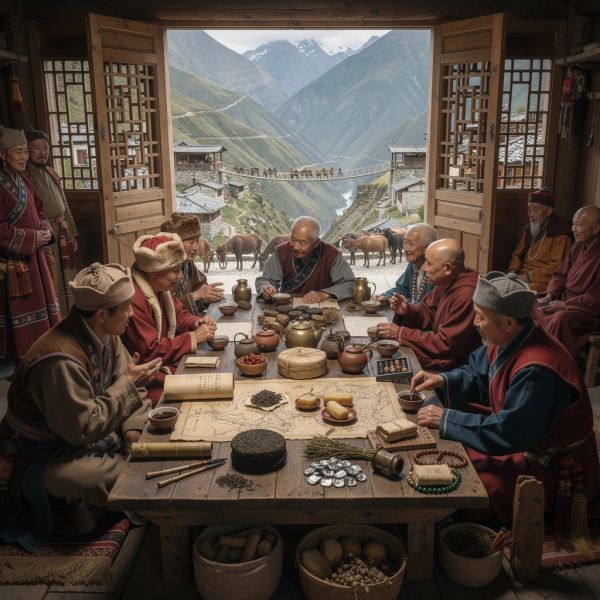
For centuries, ancient trade routes connected the tea\-producing mountains of Yunnan with Tibet and neighboring regions. Known collectively as the Tea Horse Road (茶马古道), these rugged pathways carried tea, horses, goods, knowledge, and cultural traditions across some of Asia's most challenging terrain. More than a trade network, the Tea Horse Road became a vital link between diverse peoples, landscapes, and civilizations.

Historical Overview
The Tea Horse Road was not a single road but a network of interconnected mountain routes that linked southwestern China with Tibet and neighboring regions. Although many of these routes originated centuries earlier, they remained active and influential throughout the 1700s and 1800s, playing an important role in regional commerce and cultural exchange.
Tea produced in Yunnan was compressed into cakes and other transportable forms before being carried by caravans through mountain passes, river valleys, forests, and high\-altitude plateaus. In return, traders brought horses, medicinal products, wool, salt, and other regional goods.
The journey was often difficult and dangerous. Caravans traveled through remote landscapes where weather, terrain, and distance presented constant challenges. Despite these hardships, the trade continued for generations, helping sustain communities and strengthen connections between distant regions.
The Tea Horse Road became one of the most important trade networks in the history of Chinese tea, contributing to the spread of tea culture far beyond its places of origin.
Life Along the Tea Horse Road
The Tea Horse Road supported a diverse network of merchants, caravan operators, guides, porters, farmers, and local communities. Trade was not limited to goods alone. Languages, customs, religious traditions, agricultural knowledge, and cultural practices also traveled along these routes.
Tea caravans often became moving communities, spending weeks or months crossing mountains and remote settlements. Trading posts, villages, monasteries, and market towns developed along the routes, creating important centers of regional interaction.
The movement of tea helped connect people who lived in dramatically different environments, from the tea mountains of Yunnan to the high plateaus of Tibet.
Historical Context
Tea was particularly well suited for long-distance trade because compressed tea cakes could withstand transportation across difficult terrain. Yunnan's growing tea industry benefited significantly from these trade routes, while Tibetan communities developed a strong demand for tea as part of daily life.
The Tea Horse Road existed alongside broader commercial networks but remained distinctive because of its geography and the importance of tea as a traded commodity. Monasteries, merchants, caravan operators, and local governments all played roles in maintaining and supporting these trade systems.
The continued movement of tea along these routes helped preserve economic relationships and cultural connections across regions for generations.
Why It Matters
The Tea Horse Road demonstrates that tea's history extends far beyond cultivation and preparation. It is also a story of travel, endurance, commerce, and human connection.
Through these mountain trade routes, tea became a bridge linking distant communities, cultures, and traditions. The exchange of goods encouraged the exchange of ideas, helping shape regional identities and strengthen relationships between neighboring peoples.
The legacy of the Tea Horse Road can still be seen today in the enduring popularity of Pu\-erh tea, the cultural traditions of southwestern China, and the historical connections that developed between tea\-producing regions and the communities they served.
The story of the Tea Horse Road reminds us that tea is not only a beverage. It is part of a larger story of movement, exchange, and cultural heritage that spans centuries.
The exchange of tea, goods, and ideas across mountain trade routes helped connect communities whose shared traditions continue to endure today.
Tea Through Modern China 近现代中国茶文化
1912–Present
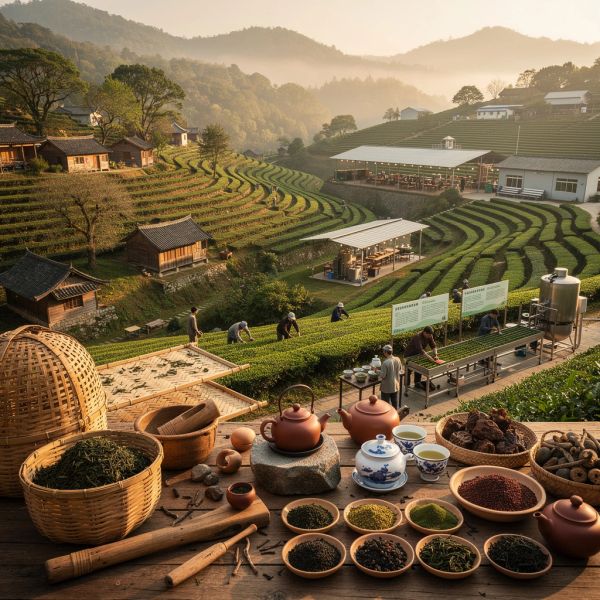
The modern era has brought profound change to China and its tea culture. Political transformation, industrialization, modernization, globalization, and technological innovation have reshaped the tea industry while centuries\-old traditions continue to be preserved and revitalized. Today, Chinese tea exists at the intersection of heritage and innovation, connecting ancient practices with a global community of tea enthusiasts.
Historical Overview
Since the early twentieth century, Chinese tea culture has experienced periods of challenge, adaptation, and renewal. Political change, economic reform, modernization, and international trade transformed the way tea is cultivated, processed, distributed, and appreciated.
During this period, traditional tea\-producing regions continued to preserve many of their historic cultivation and processing methods while also adopting new technologies and agricultural practices. Tea production became increasingly organized and scientific, helping improve quality, consistency, and distribution.
The late twentieth and early twenty\-first centuries witnessed a renewed appreciation for traditional tea culture. Historic tea regions, artisanal production methods, tea ceremonies, and cultural heritage practices experienced growing interest among both domestic and international audiences.
Today, Chinese tea is recognized around the world for its diversity, craftsmanship, and cultural significance. Ancient traditions remain alive while continuing to evolve within a modern global society.
Tea in Modern Society
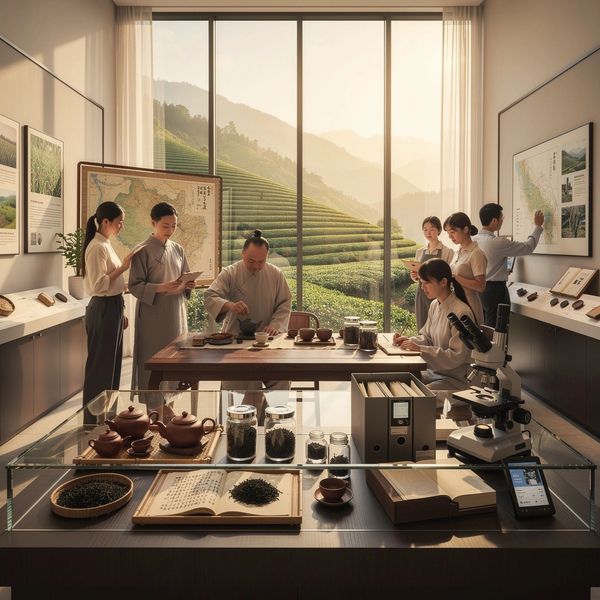
Tea continues to play an important role in daily life throughout China. Traditional tea houses, family gatherings, business meetings, cultural events, educational institutions, and tea academies all contribute to the ongoing preservation of tea culture.
Modern Gong Fu Cha practices, tea education programs, tea tourism, tea competitions, and cultural exhibitions have helped introduce new generations to the history and appreciation of tea. Digital communication and international travel have further expanded awareness of Chinese tea traditions.
The modern tea community includes farmers, tea masters, scholars, educators, collectors, merchants, and enthusiasts who work together to preserve and share tea knowledge across generations.
Historical Context
Throughout the twentieth century, China's tea industry adapted to changing economic and social conditions. Improvements in transportation, communication, agricultural science, and international trade helped expand access to tea both within China and abroad.
Many historic tea-producing regions invested in preserving traditional cultivation methods while embracing modern quality standards and production techniques. Museums, cultural organizations, educational institutions, and tea associations also played important roles in documenting and protecting tea heritage.
International interest in Chinese tea continued to grow, contributing to greater appreciation of regional tea traditions, artisanal craftsmanship, and the historical significance of Chinese tea culture.
Why It Matters
Modern Chinese tea culture demonstrates the resilience and adaptability of a tradition that spans thousands of years. Despite periods of political change, economic transformation, and globalization, tea remains deeply connected to Chinese identity, heritage, and daily life.
The preservation of historic tea regions, traditional production methods, Gong Fu Cha practices, and cultural knowledge ensures that future generations can continue to experience and appreciate this remarkable heritage.
The story of modern Chinese tea reminds us that tradition and innovation are not opposing forces. Together, they help sustain a living culture that continues to educate, inspire, and connect people around the world through tea.
Today, tea remains a living tradition, connecting past and present while continuing to inspire communities across the world.