The World's First Great Work on Tea

Foundational Text of Chinese Tea Culture by Lu Yu
Written during the Tang Dynasty by Lu Yu (陆羽), the Sage of Tea, The Classic of Tea (茶经, Chájīng) is widely regarded as the world's first comprehensive work devoted entirely to tea. More than a simple guide, it established tea as a subject worthy of study, appreciation, and cultural refinement.
Composed in approximately 7,000 Chinese characters, the work explores the origins of tea, methods of cultivation, preparation techniques, equipment, regional production, and the philosophy surrounding tea appreciation.
Although Lu Yu's original manuscript has been lost to history, surviving editions preserved through later dynasties continue to influence tea culture throughout the world.
More than twelve centuries after its creation, The Classic of Tea (茶经) remains one of the most influential works ever written on tea. Many of the principles described by Lu Yu, including the importance of origin, craftsmanship, preparation, appreciation, and respect for nature, continue to shape tea culture around the world.
Whether studying tea history, exploring ancient tea mountains, practicing Gong Fu Cha, or simply sharing tea with friends and family, modern tea enthusiasts still draw upon traditions first recorded within its pages.

Lu Yu (733-804 CE) The Sage of Tea 茶圣
Few individuals have had a greater influence on tea culture than Lu Yu (陆羽), the scholar, writer, and tea master who became known throughout history as the Sage of Tea. Living during the Tang Dynasty, a period when tea culture was flourishing across China, Lu Yu devoted much of his life to studying the cultivation, preparation, appreciation, and cultural significance of tea.
Born during a time of political upheaval, Lu Yu was raised and educated within Buddhist monastic communities, where he developed a deep appreciation for learning, observation, and reflection. As tea became increasingly important throughout Chinese society, he recognized that the knowledge surrounding tea was scattered among farmers, monks, merchants, and regional traditions. Concerned that this knowledge might be lost, he set out to document and preserve it for future generations.
The result was The Classic of Tea (茶经, Chájīng), the world's first comprehensive work devoted entirely to tea. More than a practical guide, the book examined the tea plant, methods of cultivation and processing, brewing techniques, tea utensils, geography, history, and the philosophy of tea appreciation. Through its pages, Lu Yu transformed tea from a simple beverage into a subject worthy of scholarship, cultural study, and artistic appreciation.
More than twelve centuries later, Lu Yu continues to be remembered not only for what he wrote, but for how he changed the way people think about tea. His work established many of the principles that still influence tea culture today, including the importance of origin, craftsmanship, preparation, harmony with nature, and respect for tradition.
Why Lu Yu Is Remembered
Lu Yu's greatest achievement was not simply writing a book. He preserved a body of knowledge that might otherwise have been lost to history and established a foundation for understanding tea as both an art and a cultural tradition.
Every discussion of tea origins, tea regions, tea preparation, tea appreciation, and tea culture can trace part of its heritage back to work of Lu Yu. His legacy continues wherever tea is cultivated, studied, shared, and enjoyed.
"Tea tempers the spirit and harmonizes the mind; it dispels lassitude and relieves fatigue."
— Lu Yu, The Classic of Tea
Why The Classic of Tea Still Matters Today
More than twelve centuries after its creation, The Classic of Tea (茶经) remains one of the most influential works ever written on tea. Authored by Lu Yu during the Tang Dynasty, it transformed tea from a simple beverage into a subject of study, appreciation, craftsmanship, and cultural significance.
Many of the principles first recorded within its pages continue to shape modern tea culture. Tea enthusiasts around the world still study origin, terroir, cultivation, processing, preparation, and appreciation through concepts that Lu Yu helped document and preserve. His observations on the relationship between nature, geography, craftsmanship, and the tea experience remain as relevant today as they were over a thousand years ago.
Whether preparing Gong Fu Cha in a modern tearoom, exploring the ancient tea mountains of Yunnan, studying regional tea traditions, or simply sharing tea with friends and family, tea lovers continue to follow a path first illuminated by Lu Yu. His work serves as a bridge connecting the wisdom of the past with the practices of the present.
More than a historical text, The Classic of Tea remains a living guide to understanding tea as both an art and a cultural tradition. Its enduring legacy reminds us that every cup of tea carries a connection to the landscapes, people, knowledge, and traditions that have shaped Chinese tea culture for generations.
Chapter One: Origins (一之源)

The Nature of Tea
Lu Yu begins *The Classic of Tea* by examining the very foundation of tea itself: the tea plant. Before discussing preparation, equipment, or appreciation, he believed it was essential to understand where tea comes from and why it became such an important part of Chinese civilization.
In this opening chapter, Lu Yu describes the tea plant's appearance, growth habits, and preferred environment. He notes that the finest teas often grow in mountainous regions where fertile soils, abundant rainfall, and changing elevations create ideal conditions for cultivation. These observations represent one of the earliest written recognitions of what modern tea enthusiasts now call *terroir*—the relationship between geography and flavor.
Tea's earliest use was not as a recreational beverage, but as a medicinal herb. Ancient Chinese communities valued tea for its refreshing qualities and believed it supported digestion, alertness, and overall well\-being. Long before tea became a symbol of hospitality and refinement, it was appreciated as a practical part of daily life.
As tea cultivation spread throughout China, the humble leaf gradually evolved from a medicinal remedy into a beverage enjoyed by scholars, monks, merchants, and emperors alike. Tea accompanied Buddhist monks during meditation, travelers along mountain roads, and families gathered around the evening meal. Through these experiences, tea became deeply woven into the cultural fabric of Chinese society.
Perhaps most importantly, this chapter establishes a theme that echoes throughout *The Classic of Tea*: tea cannot be separated from the natural world. The quality of a tea is influenced by the mountain where it grows, the climate that nurtures it, the soil that sustains it, and the people who cultivate it. This understanding remains central to Chinese tea culture more than twelve centuries later.
In This Chapter
- The origins and natural characteristics of the tea plant
- Why ancient Chinese communities first valued tea
- Tea's earliest role as both a medicinal herb and daily beverage
- The relationship between tea and the landscapes where it grows
- How tea became woven into Chinese civilization and culture
- The foundations of regional tea identity and terroir
- Why understanding the tea plant is essential to understanding tea itself
A Foundation for Understanding Tea
The opening chapter of The Classic of Tea reminds us that every cup begins long before harvest, processing, or preparation. Before there were tea ceremonies, celebrated mountains, famous vintages, or revered tea masters, there was simply the tea plant growing within the forests and mountains of China.
By understanding the origins of tea and its relationship to the natural world, we gain a deeper appreciation for the landscapes, traditions, and people that have shaped tea culture for thousands of years. This foundation serves as the starting point for every journey through Chinese tea.

Continue Exploring
Related Studies
→ LuYu Writes The Classic of Tea 茶经
→ The Land and the People 山水与茶人 (coming soon)
Experience the Tradition
Explore authentic teas inspired by the regions, traditions, and history discussed in this chapter through our trusted tea partners.
Chapter Two: Tools (二之具)
Harvesting Tea
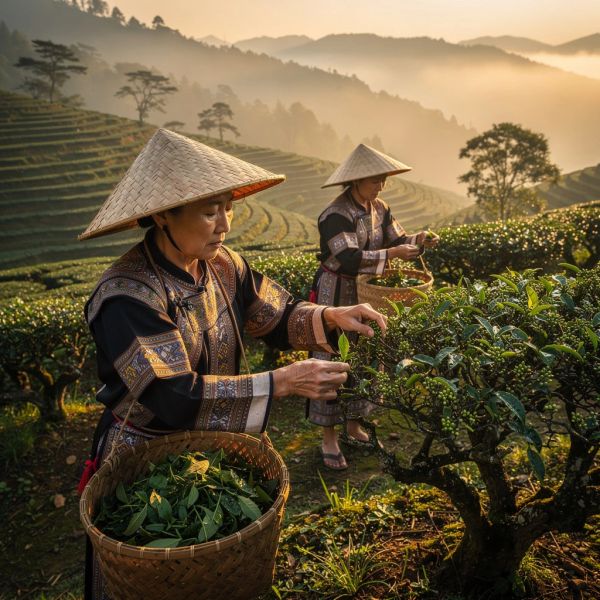
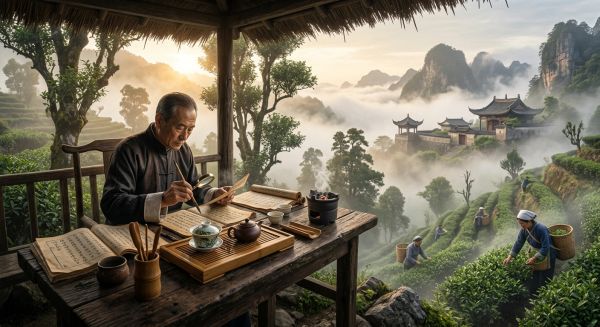
Having introduced the nature of the tea plant, Lu Yu turns his attention to the tools and practices used to harvest tea. In the Tang Dynasty, tea production relied entirely upon skilled human labor, making the harvest one of the most important stages in the journey from leaf to cup.
This chapter describes the specialized tools used to gather tea leaves and the care required when selecting them. Lu Yu recognized that the quality of a finished tea begins in the field, where timing, technique, and attention to detail determine the character of the harvest. The finest teas were produced from carefully chosen leaves gathered during the proper season and handled with great care.
Tea harvesting was more than a simple agricultural task. It reflected an understanding of nature's rhythms, seasonal changes, and the unique characteristics of each tea-growing region. Farmers learned to recognize the ideal moment when new buds and leaves reached their peak condition, balancing weather, elevation, and plant growth to achieve the finest results.
The tools themselves were designed to support this careful process, helping harvesters collect delicate leaves without damaging the plant or compromising the quality of the tea. Through generations of observation and experience, these practices evolved into traditions that continue to influence tea cultivation today.
By documenting these methods, Lu Yu preserved some of the earliest written knowledge of tea harvesting, reminding us that exceptional tea begins not in the teapot, but among the mountains and fields where the leaves are first gathered.
In This Chapter
- Traditional methods of harvesting tea leaves
- The tools used by early tea gatherers
- The importance of careful leaf selection
- Seasonal influences on tea quality
- The relationship between harvest timing and flavor
- How tea farmers worked in harmony with nature
- Why harvesting remains one of the most important steps in tea production
A Foundation for Understanding Tea Cultivation
Chapter Two reminds us that every great tea begins with a carefully chosen leaf. Before tea can be processed, brewed, or appreciated, it must first be harvested at the right time, in the right place, and with the right knowledge.
The practices described by Lu Yu reveal an enduring truth of Chinese tea culture: the quality of tea is shaped not only by the land where it grows, but also by the skill, patience, and experience of those who cultivate it. Understanding the harvest allows us to better appreciate the generations of farmers whose dedication transforms a simple leaf into an expression of place, season, and tradition.

Continue Exploring
Related Studies
→ LuYu Writes The Classic of Tea 茶经
→ The Land and the People 山水与茶人
→ Tea Processing 工艺 (coming soon)
→ Spring, Summer & Autumn Harvests 采摘季节 (coming soon)
Experience the Tradition
Explore teas from renowned tea-growing regions and seasonal harvests through our trusted tea partners, and discover how timing, terroir, and craftsmanship influence every cup.
Chapter Three: Manufacture (三之造)
Transforming Leaf into Tea
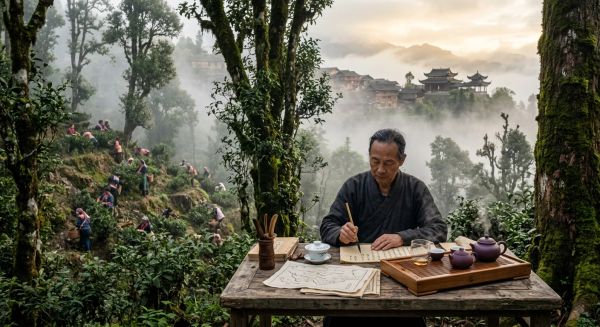
Having explored the tea plant and the harvest, Lu Yu turns his attention to the transformation that gives tea its character. In this chapter, he records the methods used during the Tang Dynasty to process freshly harvested leaves, preserving some of the earliest written knowledge of tea craftsmanship in Chinese history.
For Lu Yu, the journey of tea did not end when the leaves were gathered. Fresh tea leaves are highly perishable, and without careful preparation their quality would quickly deteriorate. Through generations of experimentation and observation, tea producers developed methods to preserve the leaf while enhancing its flavor, aroma, and character.
During the Tang Dynasty, tea was commonly steamed, compressed into cakes, dried, and stored for later use. These production techniques differed significantly from many modern tea-making methods, yet they laid the foundation for centuries of innovation and refinement. The transformation from fresh leaf to finished tea required knowledge, patience, and an intimate understanding of the materials being worked with.
Lu Yu recognized that every stage of production influenced the final result. The timing of processing, the quality of the harvest, the drying methods employed, and the skill of the artisan all contributed to the tea's ultimate character. Even at this early stage in tea history, craftsmanship was already regarded as essential to producing exceptional tea.
This chapter provides a rare glimpse into the origins of tea manufacturing and reminds us that tea is both an agricultural product and a handcrafted art. The traditions documented by Lu Yu would continue to evolve through subsequent dynasties, eventually giving rise to the diverse tea styles enjoyed throughout the world today.
In This Chapter
- Ancient methods used to process tea leaves
- Steaming, drying, and preserving tea
- The production of compressed tea cakes
- Early Tang Dynasty tea craftsmanship
- The relationship between processing and flavor
- The role of artisans in tea production
- How ancient techniques shaped the evolution of Chinese tea
A Foundation for Understanding Tea Craftsmanship
Chapter Three reveals that great tea is not created by nature alone. While the land, climate, and tea plant provide the foundation, it is human knowledge and craftsmanship that transform freshly harvested leaves into tea worthy of appreciation.The methods described by Lu Yu represent the earliest stages of a tradition that continues to define Chinese tea culture today. Understanding these ancient production techniques allows us to appreciate the skill, patience, and innovation that have shaped tea for more than a thousand years. Every modern tea, from delicate White Tea to aged Pu-erh, owes part of its heritage to the craftsmanship first documented in this chapter.
Continue Exploring
Related Studies
→ LuYu Writes The Classic of Tea 茶经
→ Tea Processing 工艺 (coming soon)
→ The Land and the People 山水与茶人
Experience the Tradition
Explore teas that showcase the diverse processing traditions of China and discover how craftsmanship transforms a single leaf into six distinct categories of tea.
Chapter Four: Utensils (四之器)
The Equipment of Tea
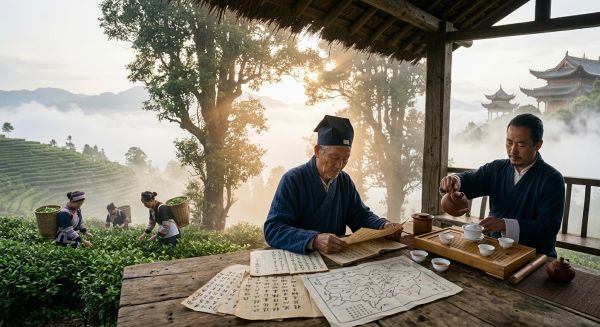
Having explored the tea plant, the harvest, and the transformation of leaf into tea, Lu Yu turns his attention to the tools required for its preparation. Among the ten chapters of The Classic of Tea, this is one of the most detailed and influential, demonstrating that tea appreciation extends beyond the leaf itself to the vessels and implements used in its preparation.
During the Tang Dynasty, tea preparation was a refined process that required a variety of specialized utensils. Lu Yu carefully documented the equipment used to grind, store, heat, boil, prepare, and serve tea. Each vessel was designed with a specific purpose, contributing to both the practical and aesthetic aspects of tea preparation.
The chapter reflects a belief that harmony exists between tea, the tools used to prepare it, and the person enjoying it. Materials, craftsmanship, proportions, and functionality all played important roles in creating a proper tea experience. Bronze kettles, ceramic vessels, bamboo tools, stone grinders, and storage containers were valued not only for their utility but also for their ability to enhance the appreciation of tea.
Beyond functionality, these utensils reveal the emergence of tea culture as an art form. The careful selection and arrangement of tea equipment reflected broader Chinese values of balance, simplicity, elegance, and respect for nature. Many of these principles continue to influence modern tea practices, from Gong Fu Cha ceremonies to contemporary tea appreciation.
By documenting these tools in remarkable detail, Lu Yu preserved one of the earliest records of tea equipment in human history. His observations provide a fascinating glimpse into the origins of tea aesthetics and the enduring relationship between craftsmanship and tea culture.
In This Chapter
- Historical tea equipment of the Tang Dynasty
- Brewing vessels and their specific purposes
- Tools used to prepare and serve tea
- The relationship between function and craftsmanship
- Early tea culture aesthetics and design principles
- The role of utensils in tea preparation
- How tea equipment influenced the development of tea culture
A Foundation for Understanding Tea Culture
Chapter Four reminds us that tea appreciation involves more than the tea itself. The vessels, tools, and materials used throughout history reveal how deeply tea became integrated into Chinese art, craftsmanship, and daily life.
The equipment described by Lu Yu demonstrates that even in the Tang Dynasty, tea preparation was viewed as a practice requiring both knowledge and attention to detail. Understanding these historical utensils provides insight into the origins of modern tea traditions and helps us appreciate the craftsmanship that continues to shape tea culture today.
From ancient bronze kettles and stone grinders to modern gaiwans and Yixing teapots, the evolution of tea equipment reflects the continuing pursuit of harmony between tea, preparation, and appreciation.
Continue Exploring
Related Studies
→ LuYu Writes The Classic of Tea 茶经
Experience the Tradition
Explore traditional tea vessels, brewing methods, and tea culture inspired by the tools and practices that have shaped Chinese tea appreciation for centuries.
Chapter Five: Brewing (五之煮)

The Art of Preparing Tea
After exploring the tea plant, the harvest, the manufacture of tea, and the utensils used in its preparation, Lu Yu arrives at what many consider the heart of tea appreciation: the brewing of tea itself. In this chapter, he presents the principles and techniques required to transform carefully crafted tea into a beverage worthy of enjoyment and reflection.
For Lu Yu, brewing tea was far more than simply combining leaves and water. Every element of the process mattered, from the quality of the water and the temperature of the fire to the timing of preparation and the condition of the utensils. Through careful observation, he recognized that even the finest tea could be diminished by poor preparation, while proper brewing allowed its full character to emerge.
Particular attention is given to water, which Lu Yu regarded as the soul of tea preparation. He evaluated different water sources and emphasized the importance of purity, freshness, and mineral balance. Mountain springs were often considered the finest source, reflecting an understanding that the quality of water profoundly influences the flavor and aroma of tea.
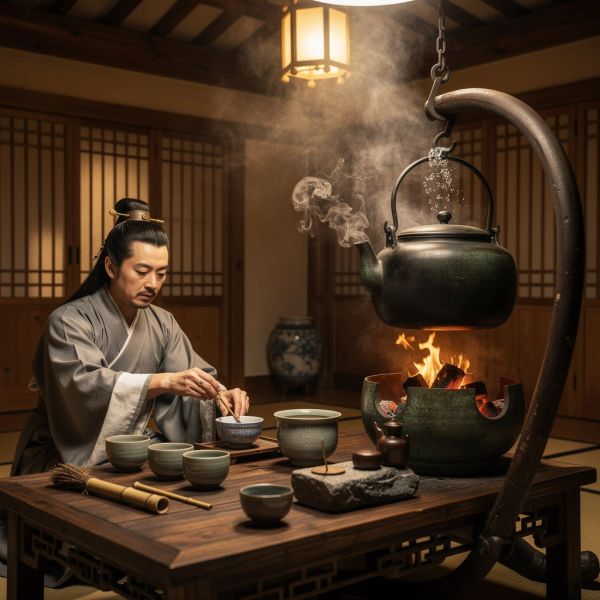
The chapter also explores the stages of boiling water, describing how experienced tea practitioners could recognize subtle changes as water heated. These observations formed the foundation of brewing techniques that continue to influence tea preparation today. By understanding the interaction between tea, water, heat, and time, practitioners could reveal the unique qualities hidden within each leaf.
Beyond technical instruction, this chapter introduces the philosophy of tea preparation. Brewing became an act of attentiveness and appreciation, encouraging patience, mindfulness, and respect for both nature and craftsmanship. Through these practices, tea evolved from a daily necessity into an experience capable of inspiring contemplation and connection.
More than twelve centuries later, the principles described by Lu Yu remain remarkably relevant. Whether preparing tea in a Tang Dynasty tea bowl or a modern gaiwan, the pursuit of balance, harmony, and flavor continues to define the art of tea.
In This Chapter
- The importance of water in tea preparation
- Traditional methods for boiling and heating water
- Fundamental brewing principles
- Early Tang Dynasty tea preparation techniques
- The relationship between water, tea, and flavor
- Appreciating aroma, texture, and character
- How brewing became an art form within Chinese tea culture
A Foundation for Understanding Tea Preparation
Chapter Five teaches that exceptional tea is not achieved through ingredients alone. The finest leaves, carefully harvested and skillfully processed, reach their full potential only when prepared with knowledge and care.
The principles recorded by Lu Yu reveal that tea preparation is both a practical skill and a cultural practice. By understanding the role of water, heat, timing, and attention, we gain insight into the traditions that continue to shape Chinese tea culture today. This chapter serves as a reminder that every cup of tea represents a partnership between nature, craftsmanship, and the person preparing it.
From the mountain springs praised by Lu Yu to the modern Gong Fu Cha table, the pursuit of the perfect cup remains one of tea's most enduring traditions.
Continue Exploring
Related Studies
→ Water and Tea Preparation 水与茶 (coming soon)
→ LuYu Writes The Classic of Tea 茶经
Experience the Tradition
Explore traditional brewing methods, tea preparation techniques, and authentic teas that demonstrate how water, craftsmanship, and careful preparation work together to create an exceptional tea experience.
Chapter Six: Drinking (六之饮)
The Culture of Tea Consumption
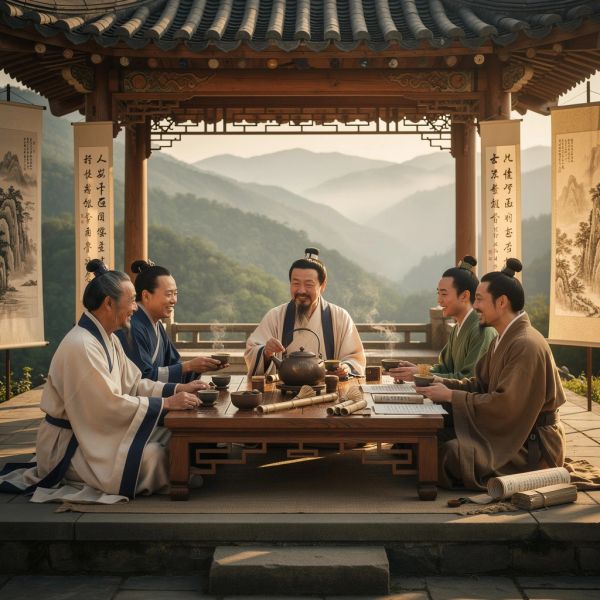
With the tea leaves harvested, processed, prepared, and brewed, Lu Yu turns his attention to the final stage of tea's journey: its enjoyment and appreciation. In this chapter, he explores how tea was consumed throughout society and how a simple beverage gradually evolved into one of China's most enduring cultural traditions.
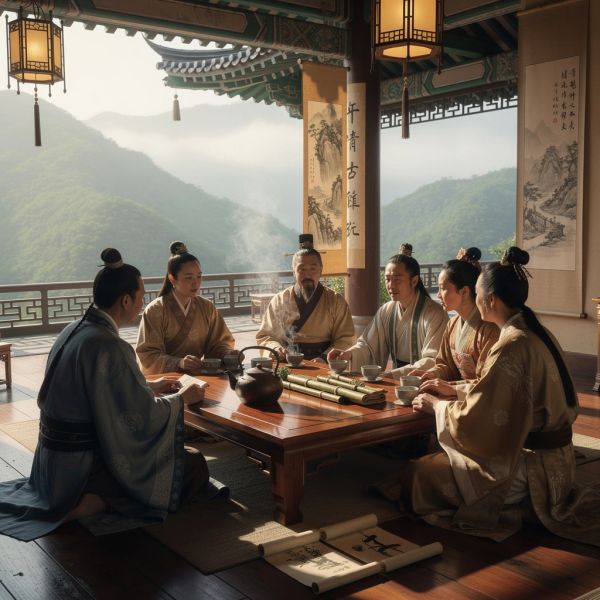
By the Tang Dynasty, tea had become far more than a practical drink. It was enjoyed by scholars seeking inspiration, monks pursuing meditation, travelers resting along mountain roads, and families gathering in their homes. Tea provided refreshment and nourishment, but it also encouraged conversation, reflection, and human connection.
Lu Yu observed that the appreciation of tea involved more than taste alone. The finest tea experiences brought together quality leaves, proper preparation, suitable surroundings, and attentive participants. Through this combination, tea became a vehicle for hospitality, learning, and cultural exchange.
As tea spread throughout China, customs and traditions emerged around its consumption. Offering tea became a gesture of respect and welcome. Tea gatherings provided opportunities for discussion, poetry, music, and scholarly pursuits. Monasteries incorporated tea into daily practice, while merchants and travelers carried tea culture across regions and communities.
This chapter reveals an important transformation in Chinese history. Tea was no longer viewed solely as a medicinal herb or agricultural product. It had become an integral part of daily life and a reflection of broader cultural values such as harmony, humility, balance, and appreciation for the present moment.
The traditions described by Lu Yu continue to influence tea culture today. Whether shared among friends, enjoyed during quiet reflection, or practiced through Gong Fu Cha, tea remains a bridge connecting people to history, culture, and one another.
In This Chapter
- Traditional tea customs and social practices
- The role of tea in daily life during the Tang Dynasty
- Tea as a symbol of hospitality and respect
- The emergence of tea appreciation as a cultural practice
- The relationship between tea, scholarship, and philosophy
- How tea influenced social gatherings and community life
- The transformation of tea from necessity to cultural tradition
A Foundation for Understanding Tea Culture
Chapter Six reminds us that tea's greatest significance lies not only in the leaf itself, but in the experiences and relationships it helps create. Through tea, generations of people found opportunities to gather, learn, reflect, and connect with one another.
The customs recorded by Lu Yu reveal how tea became woven into the fabric of Chinese civilization. From family gatherings and scholarly discussions to religious practice and ceremonial occasions, tea served as a common thread connecting diverse aspects of daily life.
Understanding how tea was consumed and appreciated allows us to better understand why tea remains one of the world's most beloved beverages. More than twelve centuries later, many of the values associated with tea, including hospitality, mindfulness, and cultural exchange, continue to shape the way tea is enjoyed around the world.
Continue Exploring
Related Studies
→ Tea & Chinese Civilization 茶与中华文明 (coming soon)
→ Tea & Buddhism 佛教与茶 (coming soon)
→ Tea & Taoism 道教与茶 (coming soon)
→ LuYu Writes The Classic of Tea 茶经
Experience the Tradition
Discover the customs, ceremonies, and traditions that transformed tea from a daily beverage into a cultural art form and explore teas that continue to embody these timeless practices.
Chapter Seven: History (七之事)
Tea Through the Ages
Having explored the cultivation, preparation, and appreciation of tea, Lu Yu turns his attention to the rich history that shaped its development. In this chapter, he compiles legends, historical records, anecdotes, and literary references that document tea's journey through Chinese civilization long before the writing of The Classic of Tea.
For Lu Yu, understanding tea required more than knowledge of leaves, tools, and brewing techniques. To truly appreciate tea, one must also understand the people, events, and traditions that transformed it from a regional plant into one of China's most cherished cultural treasures. By gathering references from earlier sources, he sought to preserve the collective memory of tea's place in society.
The chapter explores stories of tea's legendary origins, including accounts associated with Emperor Shennong, while also examining historical references found in ancient texts. Through these records, readers gain insight into how tea evolved from a medicinal herb and practical beverage into an integral part of Chinese culture, commerce, philosophy, and daily life.
Lu Yu's work demonstrates that tea was already deeply woven into the fabric of society by the Tang Dynasty. Tea accompanied scholars in their studies, monks in their meditation, officials in their travels, and families in their homes. Its influence extended beyond refreshment, shaping customs, social practices, and cultural values that would endure for centuries.
By preserving these historical accounts, Lu Yu created one of the earliest attempts to document tea's cultural legacy. His efforts remind us that tea's story is not confined to a single region or generation but represents a living tradition carried forward through countless individuals across thousands of years.
In This Chapter
- Early historical references to tea in Chinese literature
- Legends surrounding the discovery of tea
- Ancient accounts of tea use and consumption
- Tea's development within Chinese society
- Historical anecdotes preserved by Lu Yu
- The relationship between tea and Chinese civilization
- The evolution of tea culture through the centuries
A Foundation for Understanding Tea Heritage
Chapter Seven reminds us that tea is more than a beverage; it is a reflection of history itself. Every tea tradition, ceremony, and custom practiced today has roots that extend deep into the past, shaped by generations of farmers, scholars, monks, merchants, and artisans.
Through the stories and records compiled by Lu Yu, we gain a deeper appreciation for tea's remarkable journey across time. Understanding this history allows us to see tea not merely as a product of the present, but as a living cultural heritage that continues to connect people, places, and traditions across generations.
The lessons preserved in this chapter serve as a bridge between the legendary origins of tea and the thriving tea culture that continues to flourish throughout China and around the world today.
Continue Exploring
Related Studies
→ The Origins of Tea 茶的起源 (coming soon)
→ The Land and the People 山水与茶人
→ Tea Horse Road 茶马古道 (coming soon)
→ Tea & Chinese Civilization 茶与中华文明 (coming soon)
→ LuYu Writes The Classic of Tea 茶经
Experience the Tradition
Explore the stories, regions, and traditions that shaped tea's remarkable journey through history and discover teas inspired by centuries of Chinese tea culture.
Chapter Eight: Regions (八之出)
The Geography of Tea
Having documented the history, cultivation, preparation, and appreciation of tea, Lu Yu turns his attention to the landscapes that give tea its distinctive character. In one of the earliest recorded studies of tea geography, he examines the regions where tea was grown and evaluates the qualities that made certain areas more highly regarded than others.
Long before the modern concept of terroir emerged, Lu Yu recognized that place matters. He observed that the finest teas were often produced in specific mountains and regions where climate, elevation, soil composition, water sources, and local cultivation practices combined to create exceptional growing conditions. These observations laid the foundation for a principle that remains central to tea appreciation today: great tea is inseparable from the land that produces it.
In this chapter, Lu Yu documents the tea-producing regions known during the Tang Dynasty, comparing their reputations and characteristics. While many of these ancient classifications have evolved over the centuries, his work represents one of the earliest efforts to systematically evaluate tea according to geographic origin.
The chapter highlights the relationship between environment and quality. Mountainous regions with fertile soils, abundant rainfall, and moderate temperatures often produced teas of greater complexity and refinement. These observations reflected a growing understanding that tea expresses the unique characteristics of its surroundings, much as a landscape leaves its imprint upon every leaf it nurtures.
Beyond agriculture, the chapter reveals how tea regions became centers of culture, commerce, and tradition. Communities developed their own harvesting practices, processing methods, and tea customs, creating regional identities that continue to influence Chinese tea culture today.
More than twelve centuries later, tea enthusiasts still travel to famous tea mountains and celebrated growing regions in search of the unique flavors, aromas, and traditions that can only be found in their place of origin. The connection between tea and geography remains one of the most enduring themes in the study of tea.

In This Chapter
- The tea-producing regions known during the Tang Dynasty
- The influence of climate, elevation, and environment on tea
- Early observations of tea terroir and regional identity
- The relationship between geography and tea quality
- Mountain regions and their importance to tea cultivation
- How local traditions shaped regional tea styles
- Why origin remains central to understanding Chinese tea
A Foundation for Understanding Tea Terroir
Chapter Eight reminds us that tea is a product of both nature and place. The character of a tea is shaped not only by the plant itself, but by the mountains, forests, rivers, soils, and climates that surround it.
Lu Yu's observations established one of the most important principles in tea appreciation: where a tea grows matters. Understanding tea regions allows us to better appreciate the diversity of Chinese tea and the unique qualities that emerge from different landscapes.
From the ancient tea forests of Yunnan to the rocky cliffs of Wuyi Mountain and the mist-covered peaks of Fujian, each region contributes its own voice to the story of tea. By studying these places, we gain a deeper understanding of the relationship between nature, culture, and craftsmanship that defines Chinese tea.
Continue Exploring
Related Studies
→ The Land and the People 山水与茶人
→ Tea Horse Road 茶马古道 (coming soon)
→ LuYu Writes The Classic of Tea 茶经
Experience the Tradition
Explore teas from China's most celebrated tea-growing regions and discover how geography, climate, and tradition continue to shape the character of every cup.
Chapter Nine: Simplification (九之略)
Adapting to Circumstances
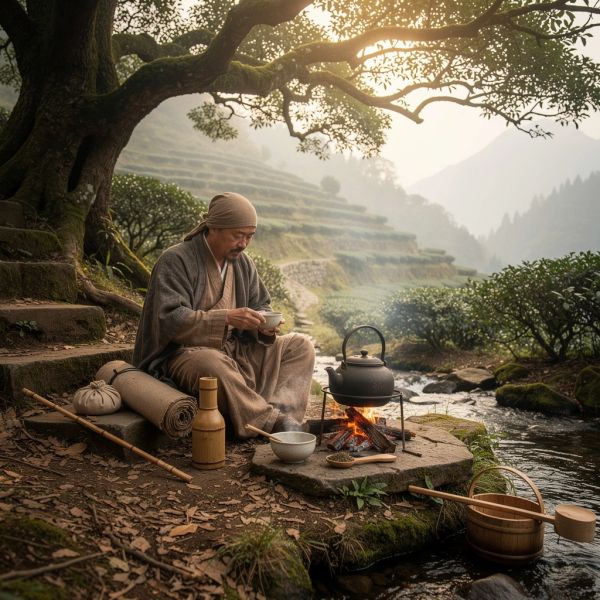
After carefully documenting the cultivation, manufacture, preparation, and appreciation of tea, Lu Yu concludes that not every situation allows for perfect adherence to established practices. In this practical chapter, he acknowledges the realities of daily life and explains how tea may still be enjoyed when ideal tools, ingredients, or circumstances are unavailable.
This chapter reveals an often-overlooked aspect of The Classic of Tea: flexibility. While Lu Yu valued precision, craftsmanship, and proper procedure, he also understood that tea was meant to be enjoyed beyond formal settings. Travelers, merchants, scholars, monks, and ordinary people often found themselves preparing tea far from ideal conditions.
Rather than abandoning tea altogether, Lu Yu encouraged practitioners to focus on what truly matters. Certain tools could be omitted, procedures simplified, and preparations adapted when circumstances required. The spirit of tea, he believed, should not be lost simply because every recommended utensil was not available.
This practical wisdom reflects a broader principle found throughout Chinese philosophy: harmony arises not from rigid perfection, but from understanding and adapting to the situation at hand. Tea should serve the moment rather than burden it. Whether enjoyed in a mountain monastery, a traveler's camp, or a scholar's study, tea remained a source of comfort, reflection, and connection.
The lessons of this chapter continue to resonate today. While modern tea enthusiasts may appreciate specialized tea ware and traditional techniques, meaningful tea experiences can still be created with simplicity, mindfulness, and respect for the tea itself.
By including this chapter, Lu Yu reminds us that tea culture is ultimately about appreciation rather than perfection. Knowledge and tradition provide guidance, but flexibility allows tea to remain accessible to all.
In This Chapter
- Practical approaches to tea preparation
- When traditional procedures may be simplified
- Essential versus optional tea equipment
- Adapting tea practices to changing circumstances
- The balance between tradition and practicality
- Flexibility within Chinese tea culture
- Why appreciation matters more than perfection
A Foundation for Understanding Simplicity
Chapter Nine teaches an important lesson that extends beyond tea itself: true mastery includes knowing when to adapt. While knowledge, technique, and proper equipment enhance the tea experience, they should never become obstacles to enjoying tea.
Lu Yu's guidance reminds us that tea has always been a companion to daily life. Whether prepared with a complete set of traditional utensils or enjoyed through simpler means, tea continues to fulfill its purpose when approached with mindfulness and appreciation.
The principles found in this chapter remain especially relevant in the modern world. They encourage us to focus less on perfection and more on the experience of tea itself, fostering a deeper connection to both tradition and the present moment.
Continue Exploring
Related Studies
→ Tea & Chinese Philosophy 茶与中国哲学 (coming soon)
→ Tea & Taoism 道教与茶 (coming soon)
→ LuYu Writes The Classic of Tea 茶经
Experience the Tradition
Discover how simplicity, adaptability, and mindful preparation continue to shape tea culture today, whether using traditional tea ware or enjoying tea through more accessible methods.
Chapter Ten: Illustrations (十之图)
Preserving Tea Knowledge
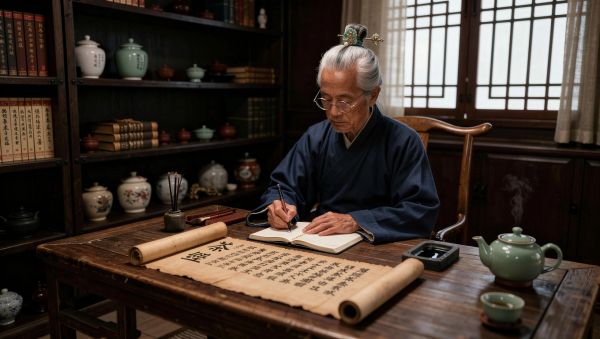
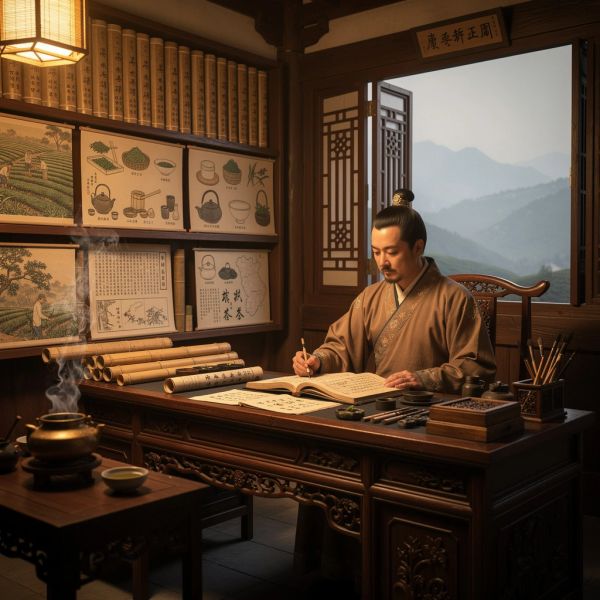
In the final chapter of The Classic of Tea, Lu Yu turns his attention from the practice of tea to the preservation of knowledge itself. Recognizing the importance of education and cultural continuity, he recommends displaying tea-related information through illustrations, diagrams, and visual references so that future generations might continue to learn from the traditions that came before them.
Throughout the preceding chapters, Lu Yu documented the origins of tea, methods of cultivation, processing techniques, brewing practices, utensils, history, and geography. Yet he understood that written words alone were not always sufficient to communicate complex ideas. Visual representations offered an effective means of teaching, allowing students and practitioners to better understand the tools, procedures, and principles that defined tea culture.
This chapter reflects a remarkable commitment to the preservation of knowledge. Rather than treating tea as a collection of isolated practices, Lu Yu viewed it as a living tradition worthy of study, documentation, and transmission. By encouraging the use of illustrations and educational displays, he sought to ensure that valuable knowledge would not be lost as generations passed.
The principles found in this chapter remain relevant today. Museums, academies, books, maps, diagrams, educational websites, and cultural institutions continue to preserve and share tea knowledge through visual storytelling. Modern students of tea still rely upon illustrations, photographs, regional maps, historical records, and educational resources to deepen their understanding of tea culture.
In many ways, this final chapter serves as Lu Yu's legacy. It is not merely a conclusion to The Classic of Tea, but a call to preserve, study, and share knowledge so that the traditions of tea may continue to inspire future generations.
More than twelve centuries later, the continued study of tea, whether through scholarship, education, or personal exploration, remains a testament to the enduring value of the knowledge Lu Yu sought to preserve.
In This Chapter
- The importance of documenting tea knowledge
- Educational uses of illustrations and diagrams
- Methods of preserving tea traditions
- The transmission of knowledge across generations
- The role of teaching in Chinese tea culture
- Why cultural preservation matters
- The enduring legacy of The Classic of Tea
A Foundation for Preserving Tea Heritage
Chapter Ten reminds us that traditions survive only when they are shared. The knowledge preserved within The Classic of Tea has endured for more than a thousand years because generations of scholars, tea masters, farmers, artisans, and enthusiasts continued to study, record, and pass it forward.
Lu Yu understood that tea culture was more than a collection of techniques. It was a living body of knowledge connecting people, landscapes, history, and craftsmanship. By encouraging the preservation and transmission of this knowledge, he helped ensure that tea would remain an enduring part of Chinese civilization.
The lessons of this final chapter continue to inspire educational institutions, museums, tea academies, and cultural organizations around the world. Every book written, every map preserved, every lesson taught, and every cup shared contributes to the continuation of a tradition that has flourished for thousands of years.
Continue Exploring
Related Studies
→ LuYu Writes The Classic of Tea 茶经
→ The YangKriege Tea Academy 茶学院
Experience the Tradition
Continue your journey through the history, culture, geography, and craftsmanship of Chinese tea, and discover how generations of knowledge continue to shape the teas enjoyed around the world today.
The Enduring Legacy of The Classic of Tea
Many of the principles described by Lu Yu more than twelve centuries ago remain central to modern tea culture. The importance of origin, craftsmanship, preparation, appreciation, and respect for nature continues to influence tea farmers, tea masters, and tea enthusiasts around the world.
Every cup of tea enjoyed today carries a connection to traditions first recorded in The Classic of Tea.
Why The Classic of Tea Still Matters Today
More than twelve centuries after its creation, many of the principles recorded by Lu Yu continue to influence modern tea culture. Tea enthusiasts still study origin, terroir, craftsmanship, preparation, and appreciation through ideas first documented in The Classic of Tea.
Whether preparing Gong Fu Cha in a modern tearoom or exploring the tea mountains of Yunnan, tea lovers around the world continue to follow a path first illuminated by Lu Yu during the Tang Dynasty.
The Legacy Continues
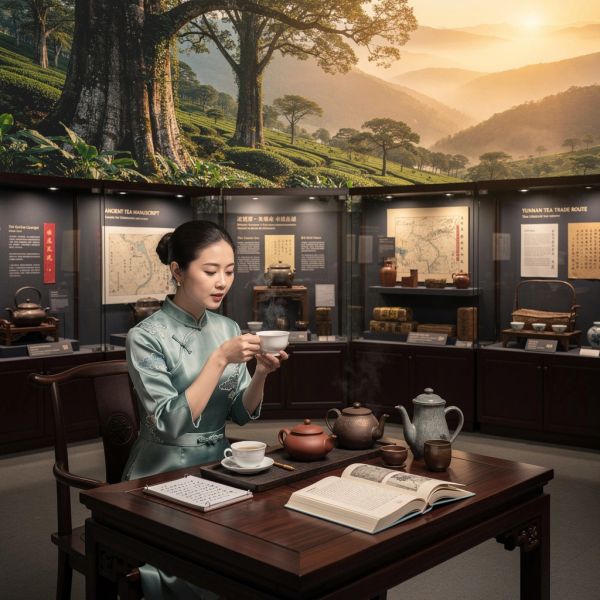
More than twelve centuries after its creation, The Classic of Tea (茶经) remains one of the most influential works ever written on tea. Through ten chapters, Lu Yu documented not only the cultivation, preparation, and appreciation of tea, but also the landscapes, traditions, people, and knowledge that gave tea its cultural significance.
His work transformed tea from a simple beverage into a subject worthy of study and reflection, establishing a foundation that continues to guide tea enthusiasts around the world. Every tea mountain, every harvest, every ceremony, and every cup carries echoes of the principles first recorded within these pages.
The journey through The Classic of Tea is ultimately a journey through the history of Chinese civilization itself, revealing how nature, craftsmanship, culture, and knowledge have come together to create one of humanity's most enduring traditions.
Continue Your Journey
→ LuYu Writes The Classic of Tea 茶经
→ Tea Horse Road 茶马古道 (coming soon)
→ The Land and the People 山水与茶人
→ Tea & Chinese Civilization (coming soon)